
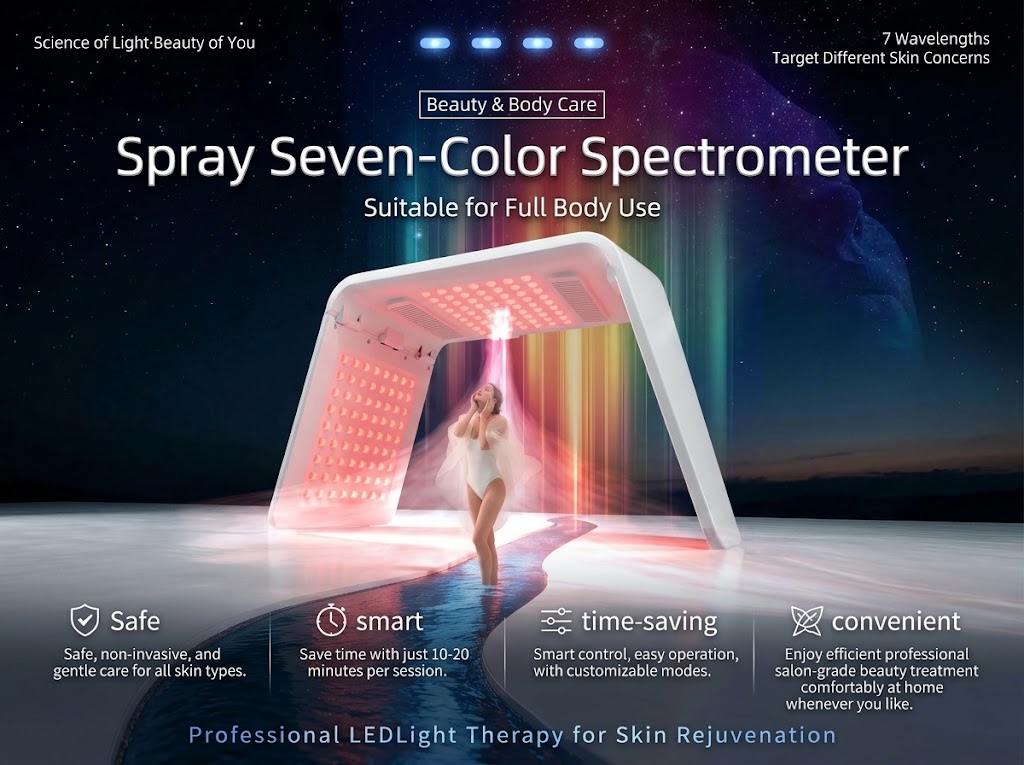
Choosing an LED beauty device is not simply a matter of counting LEDs. The wavelength, optical design, delivered dose and user experience determine whether a device is suitable for a specific skincare goal. This guide explains the most common LED wavelength bands and gives a practical framework for selecting a reliable beauty-device platform for your brand, clinic or retail channel.
What does an LED wavelength mean?
Wavelength is measured in nanometers (nm) and describes the color and energy band of light emitted by an LED. Different bands interact with the skin at different depths, so the same device can be positioned very differently depending on its wavelength mix. For product development, always ask the manufacturer for measured output data rather than relying on LED color names alone.
Common LED wavelengths for beauty devices
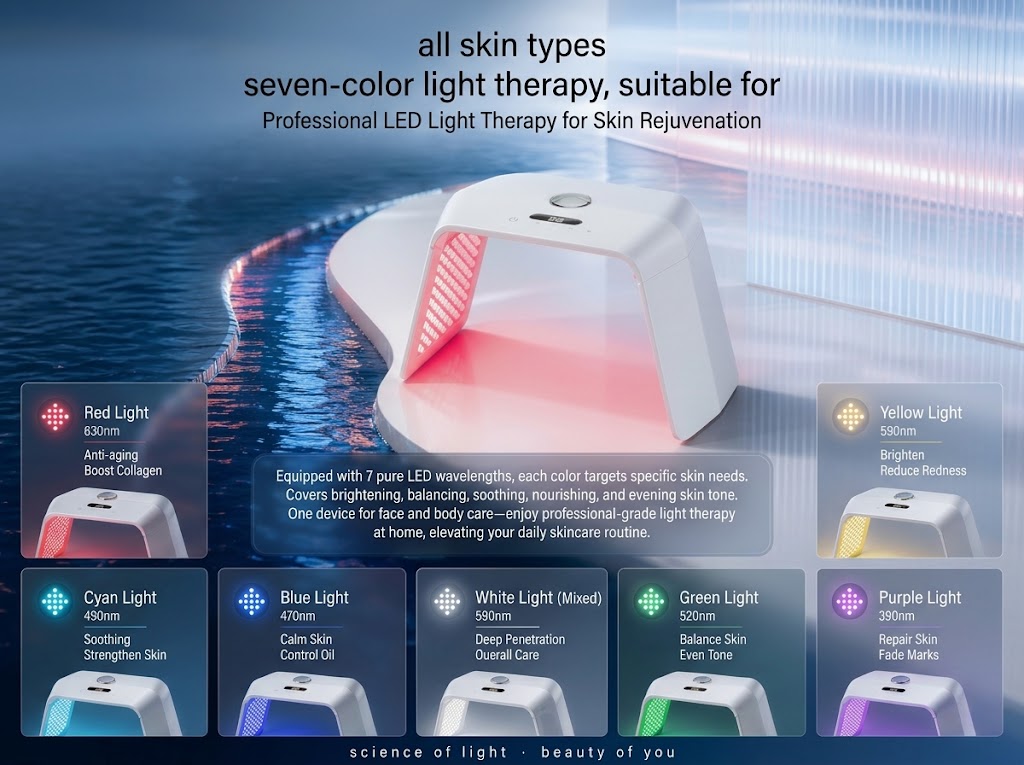
Red light: approximately 630–660 nm
Red light is widely selected for facial skincare concepts focused on a smoother-looking complexion and the appearance of fine lines. It is a practical starting point for home-use masks, panels and handheld devices because the wavelength is familiar to consumers and can be paired with a comfortable, low-heat treatment experience.
Near-infrared: approximately 810–850 nm
Near-infrared (NIR) light is invisible to the eye and is often included when a product is designed for deeper tissue comfort, post-workout recovery or body-care positioning. NIR requires careful thermal management and transparent documentation of irradiance, dose and eye-safety controls.
Blue light: approximately 415–470 nm
Blue light is commonly used in blemish-prone skin and clarifying skincare concepts. Because blue light is closer to the visible violet range, the optical design and eye-protection strategy deserve extra attention. Avoid unsupported medical promises; instead, communicate the intended cosmetic use and provide clear treatment guidance.
Green, yellow and amber light
Green, yellow and amber bands are often used for differentiated, multi-color product positioning and a more personalized user experience. Their value depends on the target customer, the selected wavelength, the dose and the evidence behind the intended cosmetic claim. A larger color menu is not automatically a better product.
Match the wavelength to the product goal
Use the customer outcome as the starting point, then select the narrowest wavelength set that supports that promise:
- Daily facial skincare: red light around 630–660 nm is a familiar, versatile choice.
- Body comfort and recovery positioning: consider a red plus NIR combination, with verified thermal and dose controls.
- Blemish-prone skin: blue light around 415–470 nm may be appropriate when the device includes clear user guidance and eye protection.
- Personalized or professional platforms: use selectable red, NIR and blue modes only when the interface, protocol and documentation make the differences understandable.
Beyond wavelength: the device-selection checklist
A credible LED wavelength beauty device is defined by the complete optical system, not a number printed on the box. Ask each manufacturer to provide:
- Irradiance and dose: measured output in mW/cm², recommended session time and calculated fluence in J/cm².
- Coverage and uniformity: a map or test method showing whether the treatment area receives consistent light.
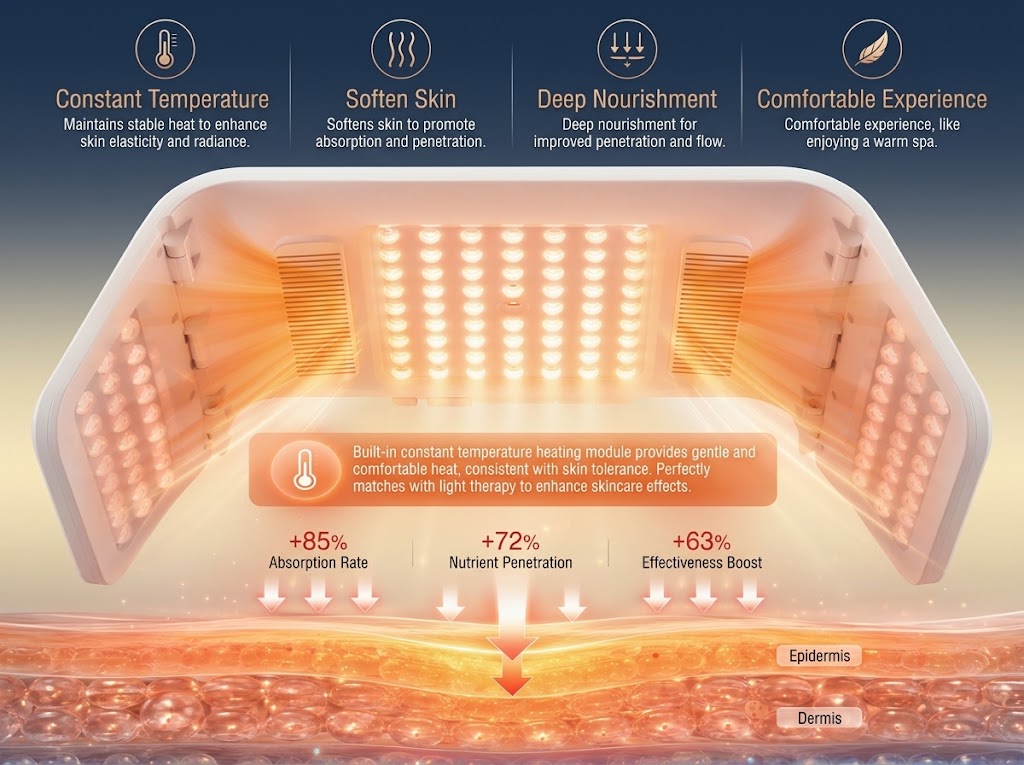
- Thermal management: heat dissipation, skin-contact temperature limits and protection against overheating.
- Eye safety: shielding, automatic shutoff or goggles where needed, plus a documented risk assessment.
- Materials and comfort: skin-contact materials, flexibility, weight, charging method and cleaning instructions.
- Quality and compliance: traceable components, production inspection, and applicable CE, FCC, RoHS or IEC 62471 documentation for the target market.
- Validation support: optical test reports, stability testing, user instructions and claim-support materials that your marketing team can review.
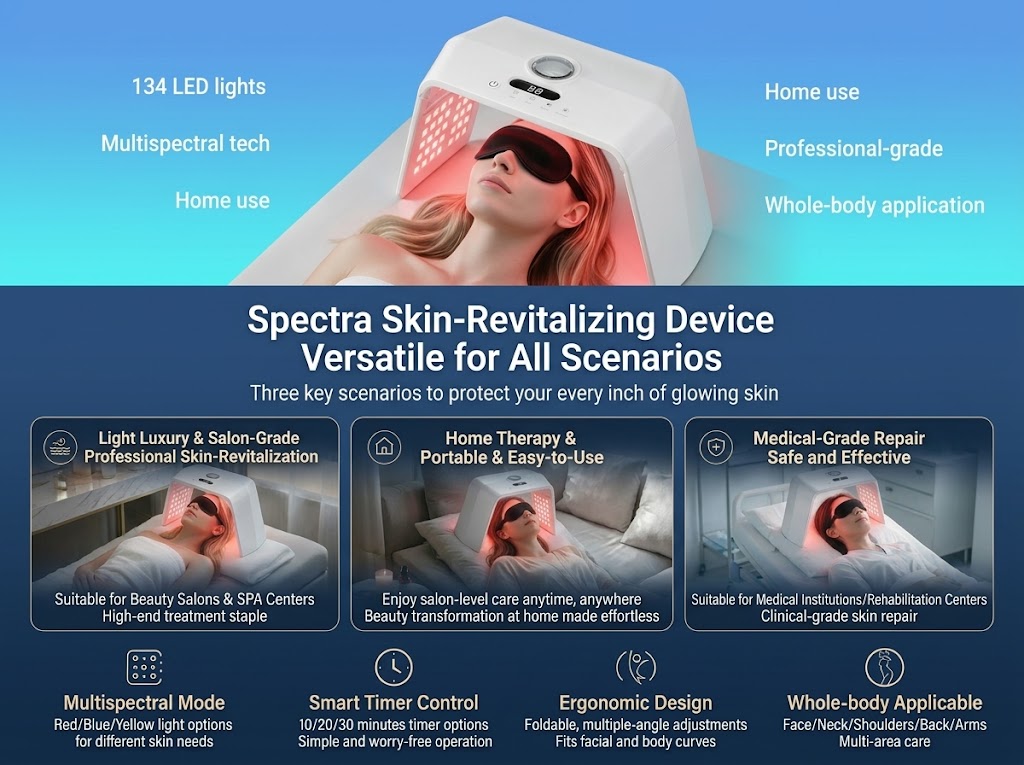
A practical five-step selection framework
- Define the claim: describe the cosmetic benefit in plain language and identify the target user.
- Choose the wavelength band: select red, NIR, blue or a justified combination based on the claim.
- Set the dose: agree on irradiance, session duration, fluence and maximum temperature before discussing industrial design.
- Verify the prototype: test output uniformity, comfort, charging, controls and safety with an independent or in-house protocol.
- Review the supply chain: confirm component traceability, quality inspection, documentation, warranty and OEM/ODM change-control processes.
Frequently asked questions
Does more colors mean a better LED device?
No. More colors can add flexibility, but each mode must have a defined purpose, safe dose and clear user interface. A focused two- or three-wavelength platform is often easier to validate and explain.
Is higher power always better?
No. Higher irradiance may shorten treatment time, but comfort, heat, eye safety and dose accuracy matter just as much. Compare delivered fluence and uniformity, not only the headline wattage.
What should I request from an LED manufacturer?
Request a wavelength tolerance, irradiance map, dose protocol, thermal data, safety assessment, certification documents, reliability results and a clear process for production changes. These details make supplier comparison much more objective.
Final takeaway
The best LED wavelength beauty device balances a credible wavelength strategy with accurate dosing, even coverage, thermal comfort, safety and dependable manufacturing. When you compare suppliers on the full system rather than on LED count alone, you can build a product that is easier to validate, easier to market and more comfortable for everyday users. For OEM and ODM support, talk with the Hayssa team about your target market, form factor and wavelength requirements.