
For beauty brands, distributors, salons and e-commerce sellers, three questions usually determine whether an OEM/ODM project can move forward: What is the minimum order quantity? Can I test a sample first? What happens between sample approval and mass production?
This guide explains the beauty device MOQ, sample process and production workflow from a manufacturer’s perspective. It will help you prepare a clearer product brief, compare quotations more accurately and reduce avoidable delays before you place a bulk order.
Quick Answer: MOQ, Samples and Production at a Glance
- MOQ: There is no universal MOQ for every beauty device. It depends on whether you choose an existing model, add a logo and packaging, change colors and accessories, or develop new tooling and electronics.
- Samples: A sample should be evaluated for function, treatment experience, appearance, accessories, packaging and target-market requirements before bulk production.
- Production: A reliable workflow moves from requirements and quotation to sample approval, pilot verification, mass production, quality inspection and shipment.
- Best way to get an accurate quote: Share your target market, sales channel, expected order quantity, customization list and desired launch date.
What Does MOQ Mean in Beauty Device Manufacturing?
MOQ means minimum order quantity—the smallest quantity a supplier can produce under an agreed specification and price structure. In beauty device manufacturing, MOQ is not simply a number chosen by the factory. It reflects the minimum practical batch size for materials, electronic components, color processing, logo printing, packaging and production-line setup.
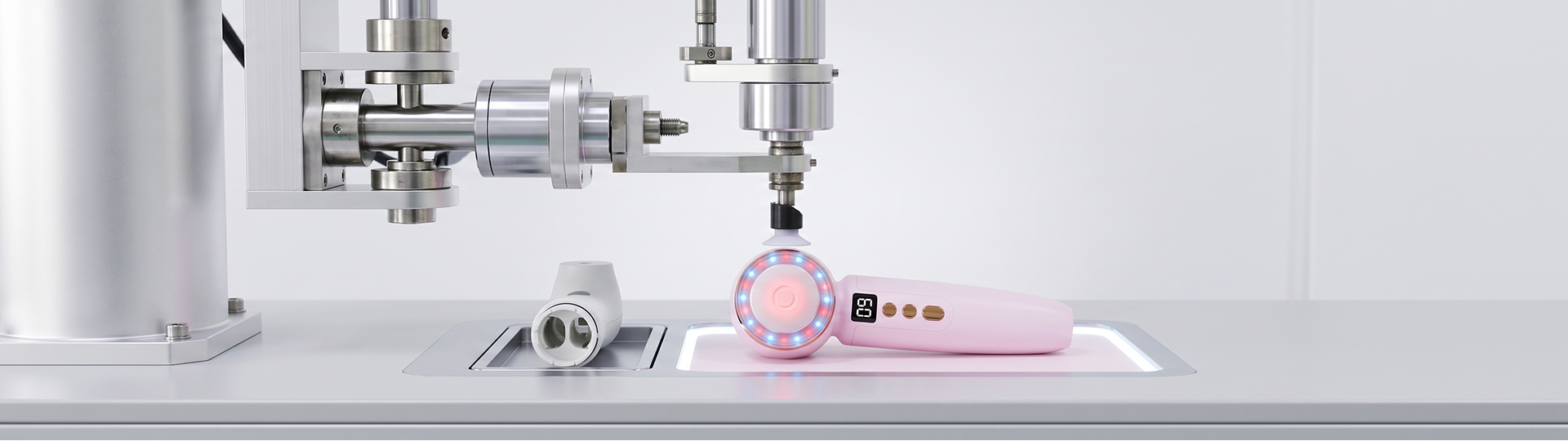
A beauty device may combine an injection-molded housing, PCB, battery, LED or optical modules, metal electrodes, silicone parts, accessories, packaging and a user manual. Each supplier in that chain can have its own order threshold. The final MOQ therefore depends on the part with the highest practical batch requirement.
Seven factors that influence beauty device MOQ
- Product platform: An existing, validated model normally supports a lower entry quantity than a completely new device.
- Branding: A standard product with a printed logo is easier to plan than a project requiring custom housing details, a unique user interface or new accessories.
- Color and surface finish: Custom Pantone colors, UV coating, metallic finishes or special textures may require separate material and process minimums.
- Packaging: A stock box with a label is different from a fully custom color box, molded tray, insert card and multilingual manual.
- Electronics and components: Customized PCB, firmware, battery specification, LED wavelength, RF/EMS configuration or display modules can change component purchasing requirements.
- Compliance plan: Documentation and testing vary by destination market, product technology and sales channel.
- Forecast and repeat orders: A credible annual forecast can help the manufacturer plan materials, tooling and phased deliveries more efficiently.
Three common MOQ scenarios
| Project Type | Typical Scope | MOQ Impact |
|---|---|---|
| Stock / trial order | Existing specification and neutral packaging | Usually the most flexible route for initial evaluation |
| Private label / light OEM | Logo, color, box, manual and selected accessories | Affected by printing, color and packaging minimums |
| Full ODM / custom development | New structure, tooling, electronics, firmware or treatment configuration | Project-specific MOQ based on engineering and supply-chain requirements |
Important: MOQ and lead-time examples are planning references, not a fixed quotation. The final terms should be confirmed against the selected model and customization list.
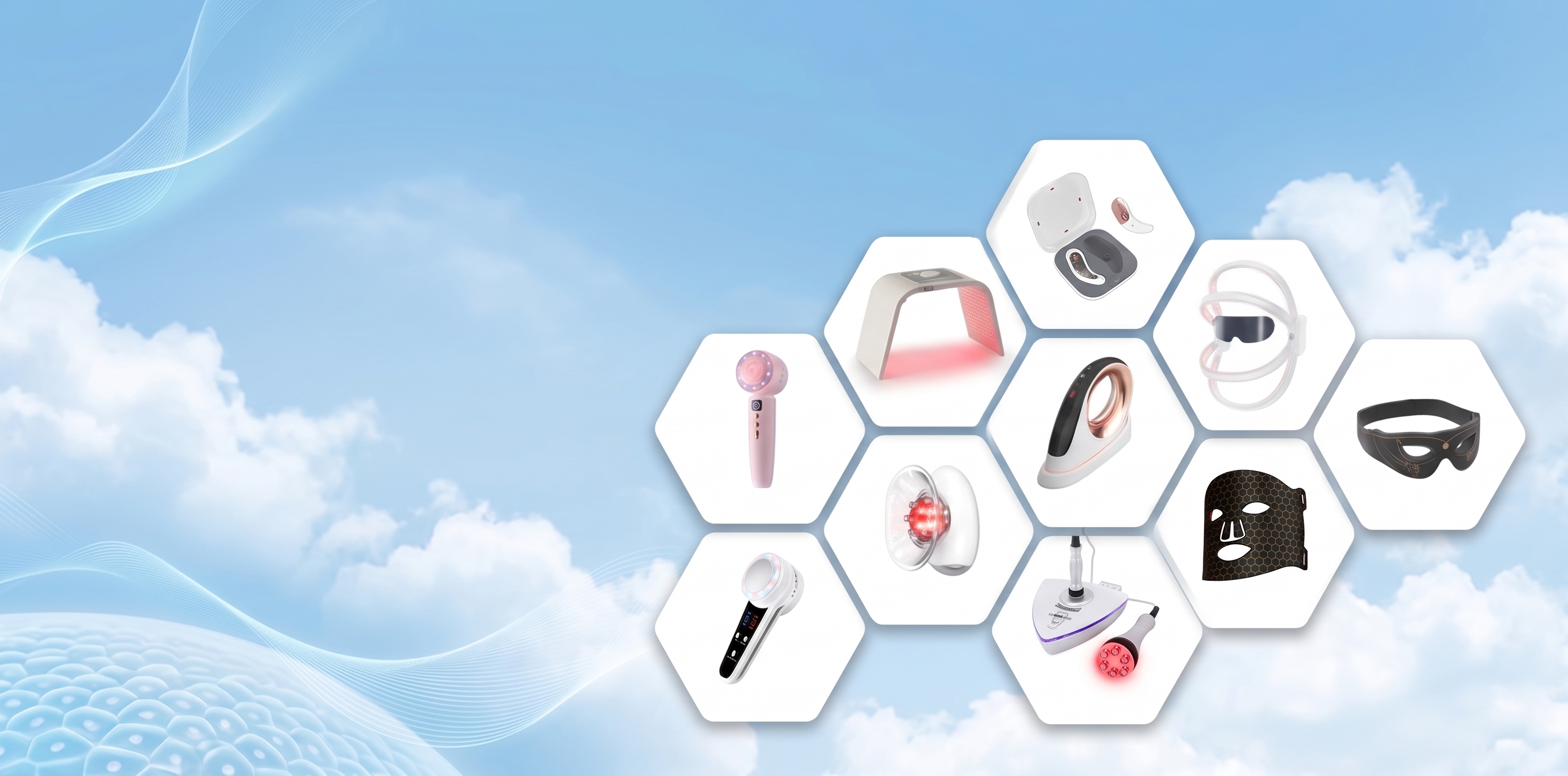
Can You Order a Beauty Device Sample Before the MOQ?
Yes. A sample order is normally the right first step before a bulk beauty device order. The purpose is not only to see the product; it is to verify whether the device fits your market, brand positioning and customer expectations.
However, a sample is not always identical to the final production unit. A standard evaluation sample may use the factory’s existing color and packaging. A customized sample may include your logo, selected color, accessories or packaging. A new ODM project can require several engineering sample rounds before the production specification is frozen.
Common sample stages
- Standard functional sample: Used to evaluate the existing product’s core function, operation, treatment feeling, ergonomics and accessory set.
- Branded sample: Adds an approved logo method, label or simple packaging elements so your team can review brand presentation.
- Appearance or CMF sample: Confirms color, material and finish. CMF stands for color, material and finish.
- Engineering prototype: Used when structure, electronics, firmware, optical design or treatment parameters are being customized.
- Pre-production sample: Represents the final approved specification before mass production and should match the signed confirmation documents.
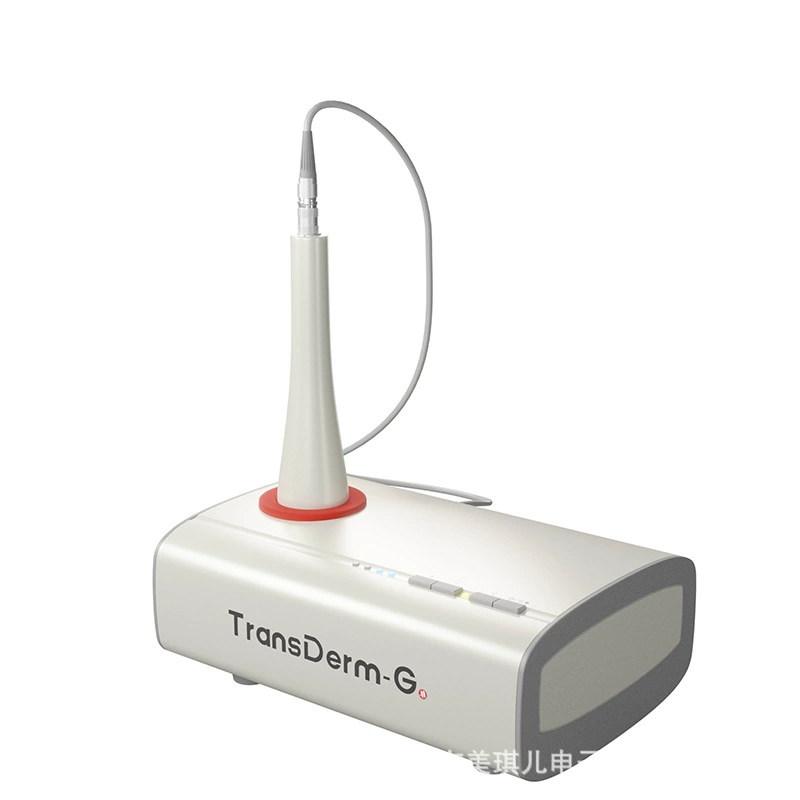
What to check when you receive a sample
- Power, charging, battery endurance and indicator behavior
- Mode switching, intensity levels, buttons, display and firmware logic
- Treatment sensation, heat control, vibration, RF/EMS output, light distribution or other applicable functions
- Housing fit, seams, surface finish, color consistency, logo position and readability
- Device weight, grip, ergonomics and ease of cleaning
- Adapter, cable, accessories, protective parts and replacement items
- Packaging structure, shipping protection, barcode area and user manual
- Claims and labels required for the intended market and sales channel
Create a sample feedback sheet and classify every comment as must change, preferred change or accepted. Include photos, short videos and measurements where possible. This prevents ambiguous instructions and reduces repeated sample rounds.
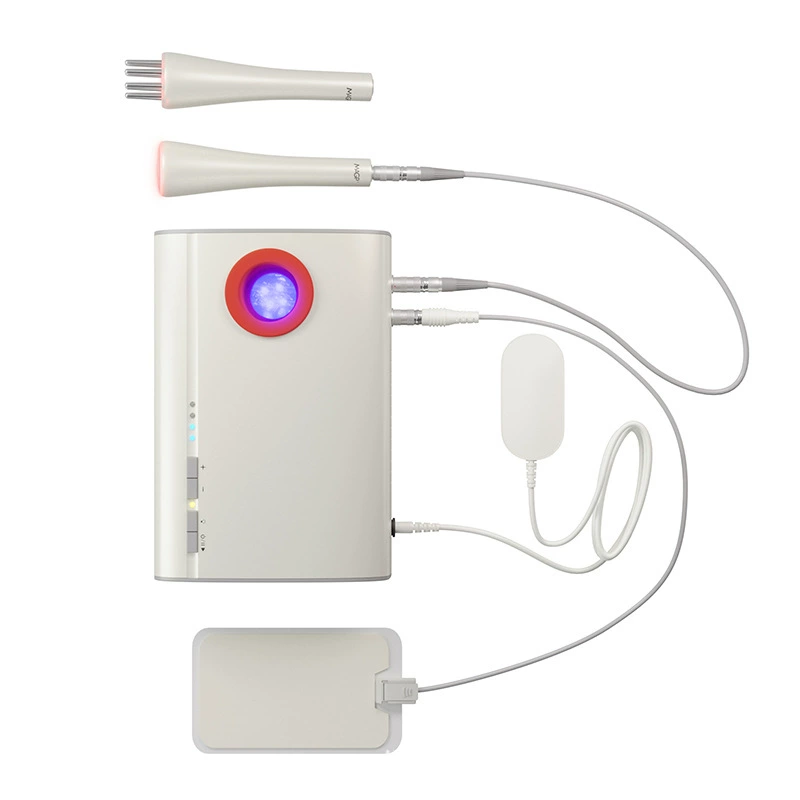
The Beauty Device Production Process: 10 Steps from Idea to Shipment
1. Requirement discovery
The project begins with your target customer, destination market, sales channel, desired functions, price position and launch plan. A useful brief includes reference products, expected annual volume, preferred materials, branding requirements, packaging languages and regulatory goals.
2. Product selection and feasibility review
The manufacturer evaluates whether an existing platform can meet the request or whether an OEM/ODM development route is required. This stage identifies major cost drivers, technical risks, test needs and decisions that must be made before quotation.
3. Quotation and project scope
A complete quotation should define the product specification, included accessories, packaging scope, sample fees, tooling if applicable, MOQ, unit-price basis, payment terms and estimated lead time. Compare suppliers using the same scope; a lower price is not meaningful if important items are missing.
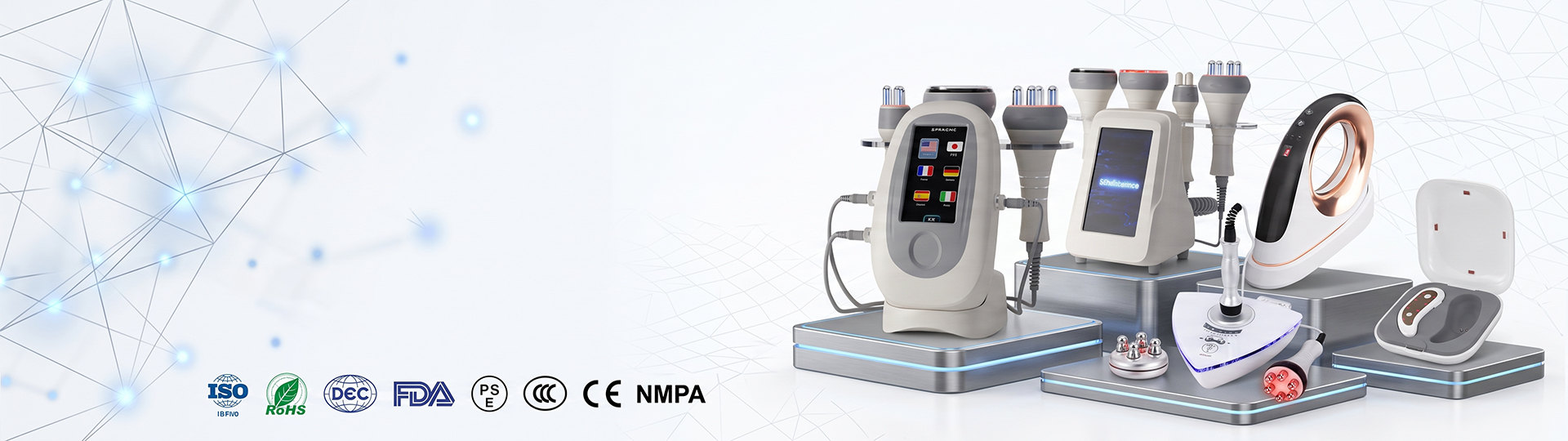
4. Industrial design and engineering
For custom projects, industrial design defines the user experience, proportions, grip and visual language. Engineering then develops the internal structure, PCB, firmware, power system, heat management, optical layout and relevant treatment modules. Design-for-manufacturing review helps avoid parts that are difficult to assemble or control consistently.
5. Prototype and sample validation
The prototype turns the specification into a physical unit. Both sides record issues, approve revisions and update the specification. Avoid approving a sample only through chat messages; use a version number and a signed or clearly documented approval record.
6. Compliance planning and verification
Testing and documentation depend on device technology and destination market. The buyer and manufacturer should align on applicable electrical, EMC, wireless, battery, material, labeling and product-claim requirements. Plan this early: changing a battery, adapter, wireless module or key component after testing can create extra work.
7. Tooling, packaging and material preparation
After the design is frozen, tooling and custom materials can be released. Packaging artwork should be checked for dimensions, color mode, barcode, model number, importer information, warnings and language. Long-lead components should be identified before the production schedule is promised.
8. Pilot run or pre-production build
A pilot build verifies the assembly process, fixtures, work instructions, test limits and packaging sequence. It is especially important for a new product or heavily customized project. Problems found in a small pilot are easier to correct than problems discovered after the full batch is assembled.
9. Mass production and in-process quality control
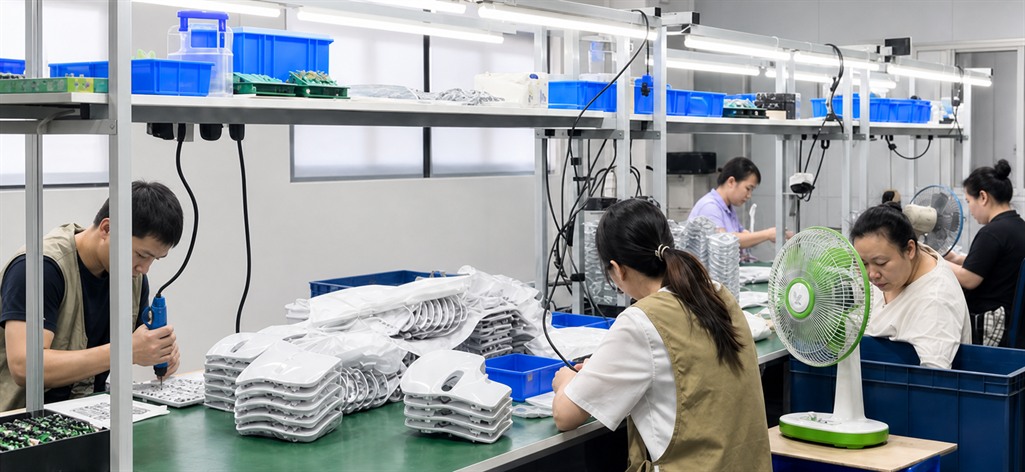
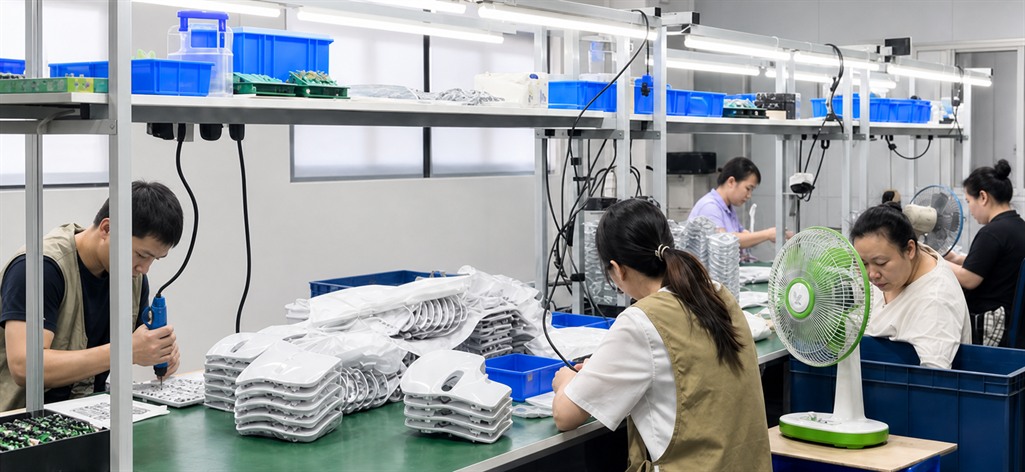
Production generally includes incoming material inspection, subassembly, electronic and functional checks, final assembly, appearance inspection, aging or reliability checks where applicable, and packing. The exact control plan should match the product’s risks rather than rely on one final inspection.
10. Final inspection, packing and shipment
Before shipment, confirm the approved inspection standard, sampling method, carton markings, product quantity and required documents. A final production report can include model and batch information, inspection results and shipment photos. Shipping method should be chosen according to launch date, freight cost and whether the product contains batteries.
How Long Do Samples and Production Take?
Lead time starts only when the required inputs are complete. Unconfirmed artwork, late feedback, component changes and unclear test requirements are common causes of delay.
| Stage | Main Variables | How to Keep It Moving |
|---|---|---|
| Standard sample | Stock status and shipping destination | Confirm model, voltage/plug and accessories at once |
| Branded sample | Logo method, color and packaging artwork | Send vector logo files and Pantone references |
| Custom prototype | Industrial design, electronics, firmware and tooling | Freeze requirements and review each version quickly |
| Mass production | Material lead time, quantity, QC plan and packaging | Approve the pre-production sample before releasing the batch |
What Should You Send a Beauty Device Manufacturer?
To receive a faster and more accurate proposal, prepare the following:
- Company, brand and primary sales channel
- Destination country or region
- Selected device or reference product
- Required functions and optional features
- Expected first order and annual forecast
- Logo file, brand colors and packaging direction
- Accessories, plug type and manual languages
- Target price range and desired launch date
- Any required test, document or labeling expectations
Planning a Beauty Device Project?
Explore Hayssa’s OEM & ODM services, review our beauty device product range, or use our manufacturer selection checklist. For a project-specific MOQ, sample plan and production schedule, contact the Hayssa team with your target market and customization requirements.
Frequently Asked Questions
Can I buy one beauty device sample before placing a bulk order?
For many existing models, a functional sample can be arranged for evaluation. Customized or newly developed products may require additional sample fees, artwork confirmation or engineering work.
Is the sample price the same as the mass-production unit price?
Usually not. Sample pricing can include individual handling, setup, customization and express shipping. The bulk unit price is calculated against the confirmed MOQ, specification and packaging.
Can I start with a low MOQ for a private-label beauty device?
A lower pilot quantity is more feasible when you select an existing product and keep customization focused on practical items such as logo and packaging. Custom color, special components and new tooling can increase the required quantity.
What is the difference between OEM and ODM beauty devices?
OEM commonly adapts an existing product platform with your branding or selected specifications. ODM involves broader design and development work, which may include structure, electronics, firmware, tooling and a more detailed validation process.
When should I pay for tooling?
Tooling should be released only after the relevant design and engineering details are reviewed and the tooling scope, ownership, revision process and acceptance criteria are clearly documented.
How can I reduce the risk of production delays?
Provide a complete brief, approve artwork quickly, avoid changing the specification after sample approval, identify compliance needs early and keep one controlled version of the product specification.
What quality checks are important for beauty devices?
Quality checks should cover incoming materials, appearance, dimensions, charging and electrical function, treatment modes, output consistency, heat management, firmware behavior, accessories, labels, packaging and other product-specific safety or performance items.
Can the order be shipped in batches?
Phased shipment may be possible depending on the quantity, material plan and commercial terms. Discuss it before production so packing, storage, inspection and freight can be planned correctly.
Final Takeaway
The best beauty device manufacturing projects do not begin with a unit price alone. They begin with a clear target market, a realistic MOQ strategy, a structured sample approval process and a production plan with defined quality gates. When every decision is documented before mass production, both buyer and manufacturer can control cost, schedule and product consistency more effectively.
Ready to discuss your project? Send Hayssa your selected model, customization list, expected quantity and target market to receive a project-specific proposal.