
Choosing the right beauty device manufacturer can determine your launch speed, product quality, and long-term margin. The right partner should do more than quote a low unit price: they should help you turn a treatment concept into a safe, repeatable, and market-ready device.
What to look for in a beauty device manufacturer
Whether you are building an LED mask, radio-frequency platform, microcurrent tool, body-care system, or a new skincare device, use the questions below to compare suppliers consistently.
1. Can they prove real manufacturing capability?
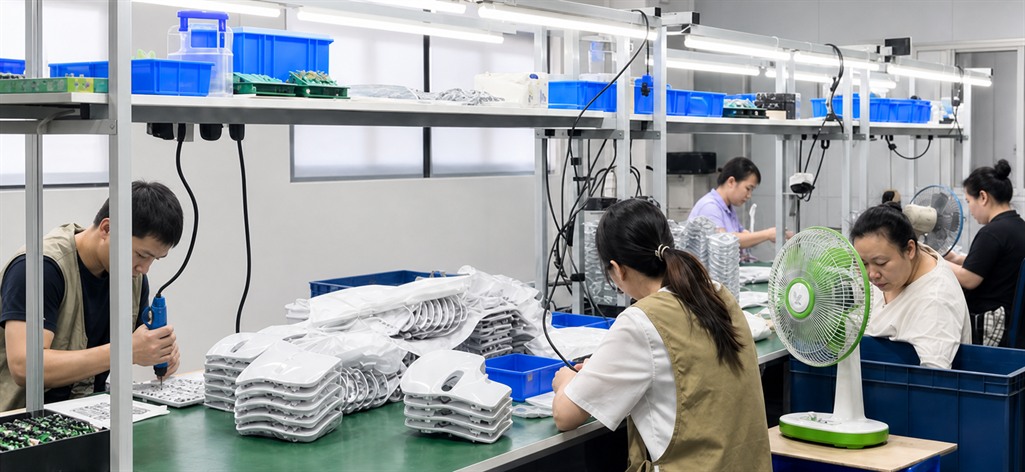
Ask for a current factory tour, production photos, and a clear explanation of which processes are completed in-house. A credible beauty device manufacturer should be able to show assembly areas, incoming-material inspection, testing stations, and finished-goods control. Confirm what is owned by the factory and what is outsourced, especially for PCB assembly, batteries, injection molding, and optical components.
2. Do they have experience with your device category?
Manufacturing experience is not interchangeable. A supplier who makes simple cosmetic tools may not understand LED wavelength management, RF output stability, thermal control, skin-contact materials, or ergonomic design. Request examples that are close to your intended use case and ask what changed between prototype and mass production.
3. Can they support OEM and ODM without locking you into a template?
OEM is ideal when you already have a design; ODM is useful when you need the factory’s industrial-design and engineering input. Check whether the team can create a functional prototype, revise the housing, improve the user interface, and document every design change. A strong partner will explain tooling ownership, revision rounds, and how your intellectual property is protected.
4. How do they manage quality at every stage?
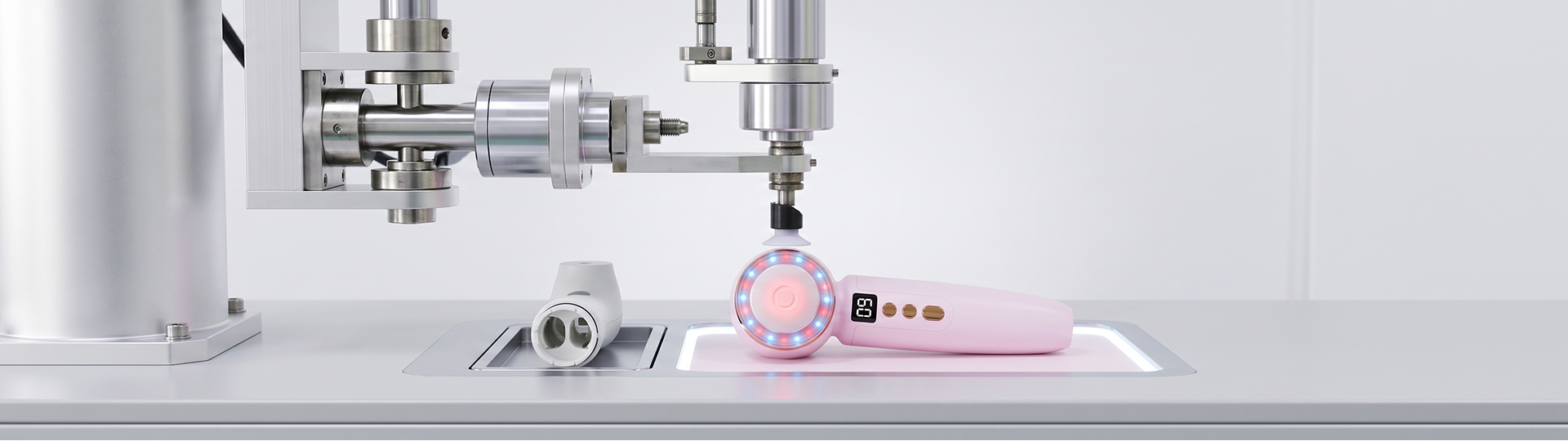
Do not accept a final inspection report as the whole quality system. Ask for incoming quality control (IQC), in-process quality control (IPQC), and outgoing quality control (OQC) procedures. Request the acceptance criteria for output power, charging, temperature, noise, appearance, and cosmetic defects. You should also agree on a golden sample, AQL level, defect classification, and corrective-action process before placing a purchase order.
5. Which certifications and market documents can they provide?
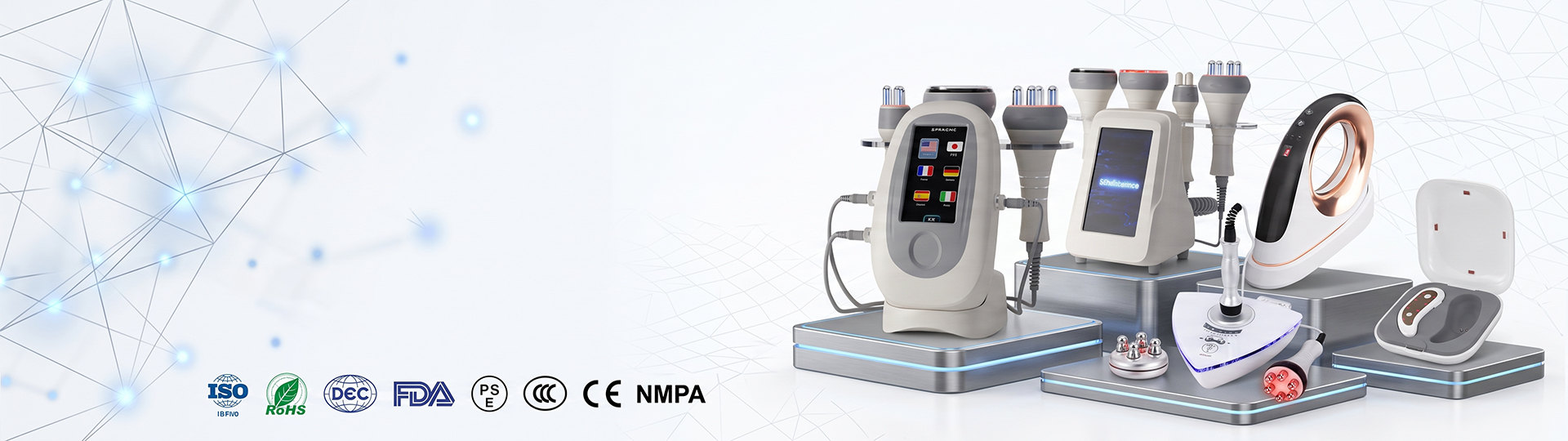
Compliance requirements depend on your destination market and product claims. Ask the manufacturer to map the required documentation for your exact model: ISO 13485 or ISO 9001 where relevant, CE/EMC, RoHS, FCC, UKCA, FDA registration or listing when applicable, battery transport documents, and product-specific test reports. A professional supplier will distinguish between a factory certificate, a component report, and approval for the finished device.
6. How transparent are the costs and minimum order quantities?
Compare total landed cost, not only the EXW unit price. Include tooling, engineering fees, sample charges, packaging, manuals, testing, firmware, spare parts, freight, and payment terms. Ask what changes at 100, 500, and 1,000 units, and whether the quoted MOQ applies per color, SKU, or order. Clear pricing now prevents surprises after tooling begins.
7. Can they protect consistency as volumes grow?
A beautiful prototype proves very little if the next 5,000 units vary. Ask how the supplier controls critical-to-quality characteristics, calibrates equipment, records serial numbers, and manages component substitutions. Confirm whether production data and inspection records are retained and how quickly the team can trace a batch if a field issue appears.
8. Do they offer practical after-sales support?
For distributors and professional users, serviceability matters. Check warranty terms, spare-part availability, repair turnaround, troubleshooting guides, and remote support. Clarify who handles software or firmware updates and whether replacement parts remain available after the model is refreshed.
9. Are communication and project management strong enough?
Choose a partner who assigns a named project manager and uses a documented approval process. Your timeline should include design freeze, EVT/DVT/PVT or equivalent build stages, testing, packaging approval, pilot production, and shipment. Ask how the team reports risks and what happens when a milestone slips.
10. Will the partnership support your brand—not just one order?
The best beauty device manufacturer becomes an extension of your product team. Look for help with packaging, user instructions, multilingual content, training videos, private-label requirements, and future product-roadmap planning. A long-term partner should be willing to improve the design after launch instead of treating the first shipment as the finish line.
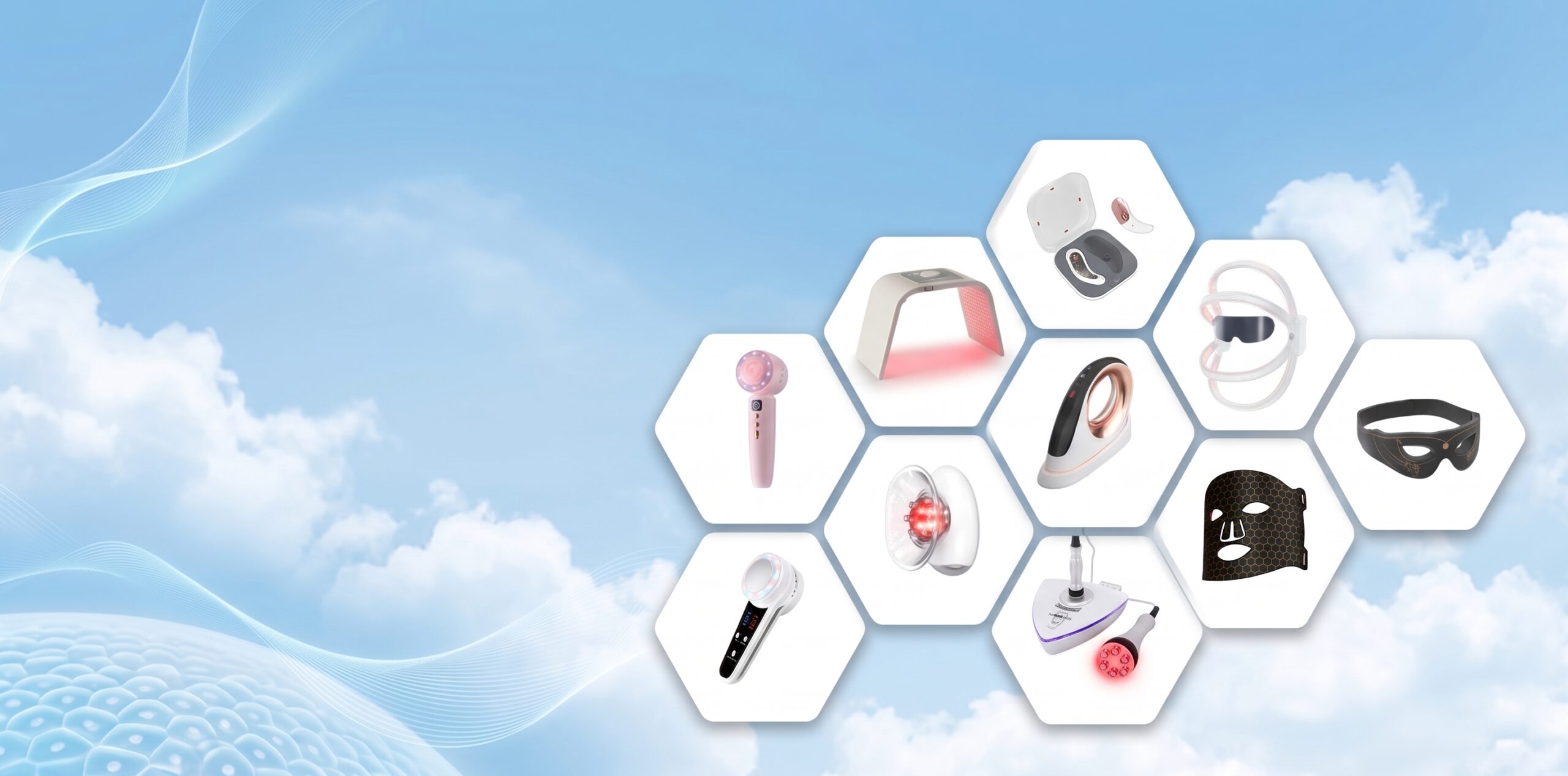
A simple supplier comparison checklist
- Factory capability and in-house processes verified
- Relevant category experience and reference models
- OEM/ODM scope, tooling ownership, and IP terms documented
- IQC, IPQC, OQC, golden sample, and AQL agreed
- Target-market certifications and test documents mapped
- Total landed cost, MOQ, lead time, and payment terms compared
- Traceability, warranty, spare parts, and after-sales support confirmed
- Named project manager and milestone plan in writing
Questions to ask before you sign
What is your realistic lead time? Separate prototype, tooling, pilot, and mass-production lead times. What happens if a sample fails? Agree on corrective actions and who pays for rework. Who owns the tooling and design files? Put ownership and access in the contract. Can you ship to our required markets? Verify labels, packaging languages, battery paperwork, and logistics experience.
Final takeaway
Price matters, but reliability, compliance, communication, and the ability to scale matter more. Shortlist two or three beauty device manufacturers, send each the same technical brief, and score the responses against the checklist above. The partner who gives the clearest evidence—not the biggest promise—will usually deliver the strongest foundation for your brand.
Need help evaluating an OEM or ODM project? Contact Hayssa to discuss your device concept, target market, and production plan.