
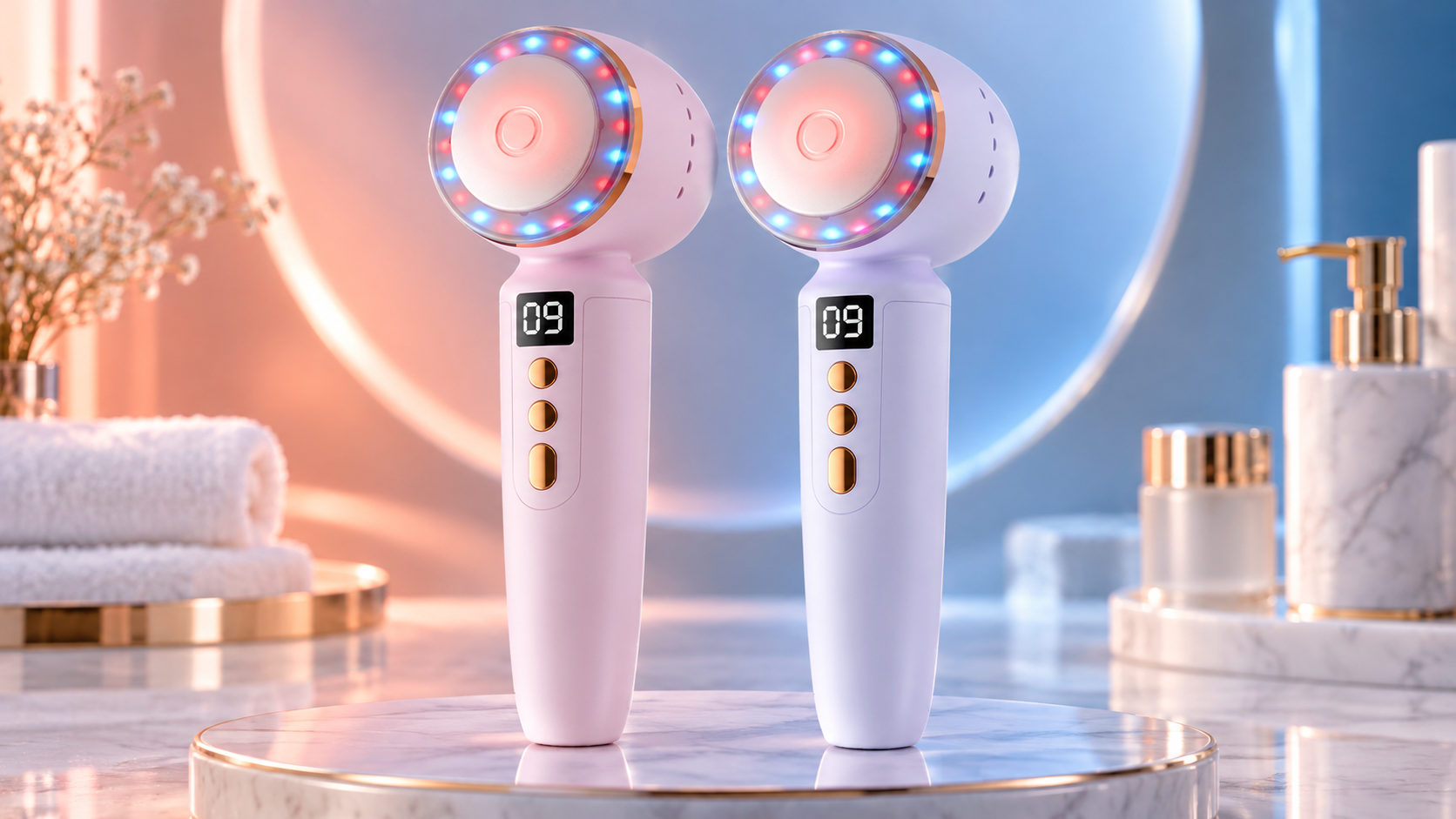
Direct answer: A hot and cold hammer facial device is a handheld beauty-device format that applies controlled warming and cooling through a contact surface. For OEM buyers, the key decision is not the function list alone: the sample must be checked for temperature stability, contact comfort, control logic, cleaning, charging, accessories and destination-market documentation before production.
This guide focuses on those buyer checks. It complements the Hayssa Model 2403 product page, which publishes the current configuration and operating ranges. It does not replace sample testing, the approved specification sheet or market-specific compliance review.
What should an OEM buyer verify first?
Start by separating published specifications from project-specific decisions. Published specifications describe the current model. Project decisions cover the exact color, logo, packaging, manuals, accessories and documents required for a particular market. Keeping these two groups separate reduces misunderstandings during quotation and sample approval.
| Evaluation area | Published Model 2403 information | What the buyer should confirm |
|---|---|---|
| Warming | 25–45°C listed range | Transition time, stability, contact comfort and final operating limits |
| Cooling | 0–20°C listed range | Cooling response, condensation handling, comfort and cleaning workflow |
| EMS | Ten intensity levels | Level presentation, button sequence, sensation and user guidance |
| LED | Three colors with listed mode combinations | Mode selection, indicators, sequence and final manual wording |
| Routine | A 10-minute operating routine is presented | Timer behavior, mode order, warnings and instructions for the approved configuration |
These values are taken from the current Model 2403 page. Battery details, materials, accessories, MOQ, lead time, branding and market documents must be confirmed for the actual project.
Why sample evaluation matters for a hot and cold hammer
Two devices can list similar functions while feeling different in use. Temperature response, contact-surface design, control placement and the order in which modes are selected all affect the buyer’s evaluation. A sample review therefore needs a written checklist, not only a visual inspection or a short demonstration.
The approved sample should become the reference point for product appearance, operating logic, packaging contents and documentation. Any requested change after approval should be recorded so that the quotation, sample record and production specification remain aligned.
Six checks to complete before approving the sample
1. Test warm and cool transitions
Record the starting condition, selected setting and time allowed for the device to respond. Check whether the contact surface changes consistently across repeated cycles. The goal is not to rely on a single touch test, but to document the behavior that the buyer expects the approved sample to reproduce.
2. Review contact comfort and physical design
Check the size and finish of the treatment head, grip, button reach, display or indicator visibility, device balance and charging connection. Confirm how the contact surface should be cleaned and whether the supplied instructions match the materials used in the approved sample.
3. Confirm EMS and LED control logic
For a multi-function device, buyers should map the operating sequence step by step: power on, select temperature mode, select EMS level, select LED setting, change intensity and finish the routine. Record which combinations are available and how the device communicates the active setting to the user.
4. Check the timer, charging and repeated-use behavior
Confirm the presented routine length, automatic stop behavior and charging method on the actual sample. Run more than one session during evaluation so that the team can observe controls, temperature response and indicators under a repeatable test process. Battery specifications and charging accessories should be written into the project specification rather than assumed from a sample photo.
5. Verify cleaning and included accessories
Ask for the proposed cleaning guidance and the exact packing list. Check cables, adapters, stands, storage items and any model-specific components. If an accessory changes, update the packing list, manual and packaging layout together.
6. Review branding, packaging and documents as one set
Logo position, device color, carton artwork, user manual, labels and market documents should be reviewed against the same approved configuration. Claims and instructions should match the functions actually available on the sample. For international projects, confirm language files and destination-market requirements before production planning.
How to position the device for a specific project
A sourcing brief should describe the intended user, sales channel and product role. The same device format may be evaluated differently for a home-use beauty brand, a distributor portfolio or a professional channel. The brief should not assume that one packaging or instruction set fits every route.
| Project question | Information to provide |
|---|---|
| Who will use it? | Intended user, experience level and use environment |
| Where will it be sold? | Target country or region, sales channel and language |
| What must be customized? | Logo, color, packaging, manuals, accessories and configuration requests |
| What must be verified? | Sample criteria, documentation needs, quality checkpoints and approval contacts |
Hot and cold hammer RFQ checklist
Use the following points when requesting a quotation or sample:
- Target market and intended sales channel
- Estimated order quantity and required sample quantity
- Required warming and cooling operating limits
- Required EMS levels and LED mode configuration
- Preferred device color and logo location
- Packaging format and manual languages
- Required accessories and charging configuration
- Destination-market document or testing questions
- Sample evaluation criteria and approval timeline
A complete RFQ helps the supplier distinguish between the current model and requested changes. Buyers who are still defining the brief can use the beauty-device RFQ checklist before discussing the sample.
Model 2403 as a published configuration example
Hayssa Model 2403 is currently presented as a handheld hot and cold facial device combining a 25–45°C warming range, a 0–20°C cooling range, ten EMS intensity levels and three-color LED settings. Its product page also presents a 10-minute operating routine and OEM/ODM discussion areas including logo application, device color, packaging, manuals, accessories and market documentation.
These published details provide a starting point for comparison. The final project should still be based on the approved sample, confirmed quotation and written specification. Buyers can review the current Model 2403 configuration or compare other face and body care devices.
Frequently asked questions
What is a hot and cold hammer facial device?
It is a handheld beauty-device format that uses a contact surface to provide controlled warming and cooling. Some configurations, including Hayssa Model 2403, also combine EMS and LED settings. Buyers should verify the exact modes and operating limits on the current sample.
What specifications are publicly listed for Hayssa Model 2403?
The current product page lists 25–45°C warming, 0–20°C cooling, ten EMS intensity levels, three-color LED settings and a 10-minute operating routine. Project-specific materials, battery details, accessories and documents require separate confirmation.
Can a hot and cold hammer be customized for a private-label project?
Private-label discussions can cover items such as logo application, device color, packaging, manuals and accessories. Availability, MOQ, lead time and documentation depend on the confirmed project scope and should be recorded before production.
What should buyers test before approving a sample?
Check temperature transitions, contact comfort, controls, EMS levels, LED selection, timer behavior, charging, cleaning and included accessories. Also compare the sample with the proposed artwork, manual and packing list.
Does the product page replace a specification sheet?
No. A public product page helps buyers understand the current model, but the approved specification, sample record, quotation and destination-market requirements should control the final project.
Prepare the next step
Before requesting production pricing, define the target market, quantity, configuration and sample checks. To discuss Model 2403 or another beauty-device format, review Hayssa’s OEM and ODM services or send a project inquiry with the product direction and required customization.